 By Owen Palmer
Updated November 2026
A stovetop Italian coffee maker, often called a moka pot, suits people who want strong, espresso-style coffee without buying a machine. It works best for drinkers who make coffee at home on a gas or electric range, enjoy a concentrated cup for milk drinks or an Americano, and don’t mind a few minutes of hands-on attention. It is a poor fit for anyone who wants push-button convenience, a large batch for a crowd, or true 9-bar pressure extraction with crema. This review looks at the Primula Classic Stovetop Espresso and Coffee Maker, an aluminum moka pot sized for six espresso cups.

Primula Classic Stovetop Espresso and Coffee Maker, Moka Pot for Italian and Cuban Café Brewing, Greca Coffee Maker, Cafeteras, 6 Espresso Cups, Silver
Product Overview
The Primula Classic is a three-chamber stovetop brewer. Water goes in the bottom chamber, finely ground coffee sits in a removable filter basket, and a top chamber collects the brewed coffee. When the water heats, steam pressure pushes it up through the grounds and into the top chamber. The listing describes it as suitable for Italian and Cuban-style café brewing, and it includes six espresso cups, which makes it a familiar entry in the moka pot category.
It belongs to the same family as the classic moka pot design popularized decades ago. Its main appeal is simplicity: no electronics, no pods, and no pump. If you already know how a moka pot works, the Primula will feel familiar. If you have never used one, expect a short learning curve around grind size and heat control.
For background on how this brewing method compares with other machines, see Types of Coffee Makers: How Each One Brews and Who It Suits.
Key Features & Specifications
The table below lists only the details that the product name and common manufacturer descriptions for this model type support. Check the listing for exact dimensions and materials before you buy. We also found Best AeroPress Coffee Makers for Home and Travel: 3 Compared useful on this point.
| Feature | Details |
|---|---|
| Brewer type | Stovetop moka pot (Italian-style) |
| Capacity | 6 espresso cups (listed capacity; actual brewed volume is smaller than a drip carafe) |
| Heat source | Stovetop use (gas, electric, and similar ranges) |
| Construction | Three-part body: base boiler, filter basket, upper collection chamber |
| Color | Silver |
| Brewing style | Espresso-style and café-style brewing (Italian and Cuban café) |
| Power | None (manual, stovetop-driven) |
Moka pots of this type are generally made from aluminum, which heats quickly and is light to handle. Some owners prefer stainless steel for induction compatibility and easier cleaning, so confirm the base material if you cook on induction, because aluminum moka pots typically need an induction-compatible base or a separate adapter.
Pros & Cons
Pros
- Simple, electronics-free design with very few parts to wear out
- Produces a concentrated, strong coffee suited to milk drinks and Americanos
- Compact footprint that fits in small kitchens and apartments
- Works on common stovetops without a plug-in appliance
- Low maintenance: rinse, dry, and replace the gasket when it wears
Cons
- Not true espresso: no 9-bar pump, so crema is thin or absent
- Requires attention; you must watch the pot to avoid scorching or a bitter, over-extracted brew
- Six-cup rating refers to small espresso cups, so it is not a drip-style volume for a group
- Aluminum bodies are not dishwasher-safe and can discolor with use
- Induction users may need a compatible base or an adapter
Performance Analysis
Performance with a moka pot depends less on the model and more on technique. The Primula’s three-chamber design and manual operation mean the result is shaped by four variables: grind size, dose, water temperature at the start, and how quickly you remove the pot from heat. Owners of moka pots in general often report that a medium-fine grind, filled to just below the safety valve and never tamped, yields the most balanced cup. Pressing the grounds down tends to slow extraction and can push the coffee toward bitterness.
Owner feedback patterns for aluminum stovetop brewers also show a few recurring themes. Many users say the first brew tastes slightly metallic until they run one or two cycles of water through. Others note that the gasket is the most frequently replaced part and that a loose or hardened gasket causes leaks at the seam. Heat management is the other common complaint: on high heat, coffee can sputter and taste burnt, while low-to-medium heat tends to produce smoother results.
Because the listing describes espresso-style brewing rather than true pressurized espresso, set expectations accordingly. You will get a bold, syrupy cup with a strong flavor profile. You will not get the thick, long-lasting crema of a pump machine. For many people making lattes or cappuccinos at home, that trade-off is acceptable given the lower cost of entry and the absence of electrical components.
Who Should Buy This Product?
This pot makes sense for a home cook who already drinks espresso-style coffee, owns a range, and wants a dependable, low-tech option. It also suits a small household, a weekend coffee routine, or someone who wants a backup brewer. Students, apartment dwellers, and travelers with access to a stove often appreciate its compactness.
Skip it if you need to brew for a crowd every morning, want to walk away while coffee brews, or expect café-level crema from a single press. Drinkers who prefer a hands-off drip machine may find What to Expect from a Budget Drip Coffee Maker a better match for their routine. If you want single-cup convenience without measuring grounds, a pod machine may suit you better; compare options in Single Serve Coffee Makers Explained: Pods, Reusable Filters and Pod-Free Options.
Buying Guide
Before buying any stovetop Italian coffee maker, consider these points.
- Cup size. The “6 cup” rating on moka pots refers to espresso-sized cups, roughly 2 ounces each. A six-cup pot yields far less coffee than a six-cup drip carafe. If you want two full mugs, look at a larger size.
- Base compatibility. Check whether the pot works on induction if you have that type of cooktop. Many aluminum models do not.
- Material. Aluminum heats fast and is lightweight. Stainless steel is sturdier, more durable, and works on induction in many designs, but it can take longer to heat.
- Gasket and spare parts. Check that replacement gaskets and filter baskets are available. A worn gasket is the most common reason a moka pot starts leaking.
- Grind. Buy a medium-fine grind or grind your own. Pre-ground espresso is often too fine and can clog the filter or over-extract.
Here are three well-known alternatives worth comparing:
-

Bialetti Moka Express Iconic Italian Stovetop Espresso Maker (Natural Silver, 6 Cups)
View on Amazon
The Bialetti Moka Express is one of the most recognized names in the category and a frequent reference point for moka pot buyers. -
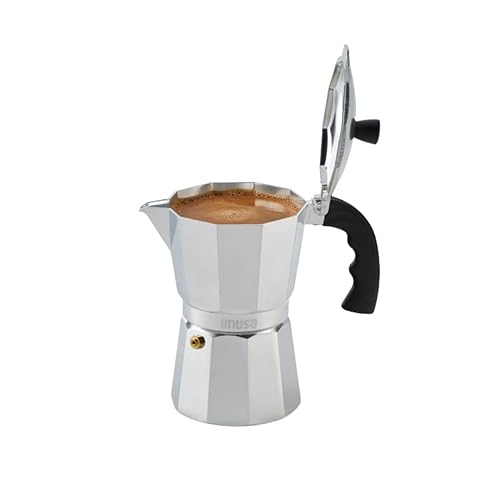
Ideal for Brewing Espresso Imusa USA Aluminum Stovetop 6-cup Espresso Maker (B120-43V), Silver
View on Amazon
The Imusa aluminum 6-cup espresso maker is another classic stovetop design aimed at budget-minded buyers who want the same basic brewing method.
For a broader list of stainless and other moka options, see 7 Best Stainless Steel Moka Coffee Makers for Stovetop Espresso (2026) and Moka Coffee Maker Bialetti: 5 Best Models for Stovetop Espresso (2026).
FAQ
How much coffee does a six-cup stovetop Italian coffee maker make?
The rating refers to espresso cups, which hold about 2 ounces each. A six-cup moka pot typically yields roughly 10 to 12 ounces of brewed coffee, depending on fill level and the specific model. Check the manufacturer’s stated capacity for the exact figure.
What grind size should I use in a moka pot?
Use a medium-fine grind, finer than drip but coarser than fine espresso powder. Grinds that are too fine can clog the filter and cause bitter coffee. Fill the basket level without tamping.
Can I use a moka pot on an induction cooktop?
Many aluminum moka pots are not induction-compatible. Check the product details for an induction-ready base. If it is not, an induction adapter plate is a common workaround, though results vary.
Why does my moka pot coffee taste bitter or burnt?
The most common causes are heat that is too high, grounds packed too tightly, or leaving the pot on the burner after the top chamber starts to gurgle. Use medium-low heat, avoid tamping, and remove the pot from the stove as soon as brewing finishes.
How do I clean a stovetop Italian coffee maker?
Disassemble the pot after it cools, rinse all parts with warm water, and avoid dish soap if it leaves residue you can taste. Dry completely before reassembling. Never put aluminum parts in the dishwasher. Replace the gasket when it hardens or no longer seals.
How often should I replace the gasket?
Replacement timing depends on use and cleaning, but owners commonly replace gaskets once a year or whenever leaks or a rubbery feel appear. Keep spares on hand so a worn seal doesn’t end your brewing.
Is a moka pot the same as an espresso machine?
No. A moka pot uses steam pressure, usually lower than the roughly 9 bars of a pump espresso machine. The result is strong and concentrated but typically lacks thick crema. Consult the manufacturer’s guidance for the most accurate operating information.
Are these safe to use on a gas stove?
Yes, stovetop moka pots are designed for gas and electric ranges. Keep the handle away from the flame, use a burner size that matches the base, and never leave the pot unattended while heating. For any concerns about your specific appliance, consult a qualified technician.
Final Verdict
The Primula Classic Stovetop Espresso and Coffee Maker is a sensible choice for someone who wants strong, espresso-style coffee from a simple, electronics-free stovetop pot. It rewards careful attention to grind, heat, and cleaning, and it is not a shortcut to café-quality crema. If you accept that trade-off and have a suitable stove, it is worth considering. If you need volume, hands-off convenience, or induction compatibility without an adapter, look elsewhere.
About Owen Palmer
Owen Palmer is part of our editorial team and reviews and edits our coffee machines guides, checking product details against manufacturer specifications and owner feedback.