By Owen Palmer
Quick answer
Our overall pick for the best manual espresso maker is the Flair Classic, which offers a complete lever system with a pressure gauge. The Flair 49 PRO is best for those wanting a larger, all-metal brew path, while the STARESSO PLUS and Wacaco Minipresso GR are compact choices for portability.
Manual espresso makers put you in complete control of the brewing process, from pre-infusion to pressure, without needing electricity. This guide compares the specifications and features of several widely available models to help you find the best manual espresso maker for your kitchen or travels. Our picks are based on a comparison of manufacturer listings and specifications.
Our picks at a glance

Pros
- Includes both a bottomless and a flow control portafilter
- Features a completely detachable brewing head for cleaning
- Built with cast aluminum and stainless steel; 3-year warranty on key parts
- Comes with a pressure gauge
Cons
- Manual operation requires physical effort
- The listing does not mention if it includes a tamper
- Small shot capacity compared to some semi-automatic machines
Pros
- No plastics in the brew path; uses stainless steel components
- Integrated pressure gauge with a marked espresso zone
- Includes both pressurized and bottomless filter baskets
- Compact footprint for a lever machine
Cons
- 49mm portafilter uses a non-standard size
- Manual operation only
- The listed 800-watt wattage is implausible for a manual machine and is not a relevant spec

Pros
- Very compact and portable with a folding design
- All components separate for deep cleaning
- Made with food-grade stainless steel and silicone
- Holds up to 24 grams of coffee
Cons
- Very small capacity (24 ml per listing)
- The listing does not mention a pressure gauge
- Manual pumping requires physical effort

Pros
- Extremely compact and lightweight
- No electricity or batteries needed
- Simple, pump-style operation
- Compatible with ground coffee
Cons
- Main body is made of plastic
- Very small capacity
- Accessories for longer shots are sold separately
- The listing does not mention a pressure gauge
How we chose
We compared the manufacturer listings and specifications for several manual espresso machines on Amazon as of October 2026. We did not test, use, or review these products hands-on. Our selections are based on analyzing the listed features, materials, capacities, and intended use cases to identify standout options for different needs.
What to look for
- Control and Pressure: Look for features like a pressure gauge and lever design that allow you to manage the extraction profile. For more on how these machines work, see our guide on Understanding Manual Espresso Machines.
- Build and Materials: Check what materials are in the brew path. Stainless steel and aluminum are common for durability, while some portable models use plastic bodies.
- Capacity and Size: Consider the shot capacity and the physical footprint. Lever machines for home use are larger, while travel models are designed to be compact.
- Ease of Cleaning: Some designs feature completely detachable brewing heads or components that separate for easy rinsing.
Best Manual Espresso Makers: our picks in detail
1. Best overall manual espresso maker: Flair Classic
The Flair Classic is a fully manual lever espresso press that requires no electricity. It includes both a bottomless and a flow control portafilter, giving you options for convenience or advanced control. The listing states it can yield a 40 ml shot from a dose of up to 18 grams of coffee.
It features a detachable brewing head for easy cleaning and is built from materials like cast aluminum and stainless steel. The press stand and brewing head come with a 3-year warranty, according to the listing.
Best for: Home baristas who want a complete, non-electric lever system with included pressure gauge and portafilter options.
Pros
- Includes both a bottomless and a flow control portafilter
- Features a completely detachable brewing head for cleaning
- Built with cast aluminum and stainless steel; 3-year warranty on key parts
- Comes with a pressure gauge
Cons
- Manual operation requires physical effort
- The listing does not mention if it includes a tamper
- Small shot capacity compared to some semi-automatic machines
2. Best for a premium, all-metal brew path: Flair 49 PRO
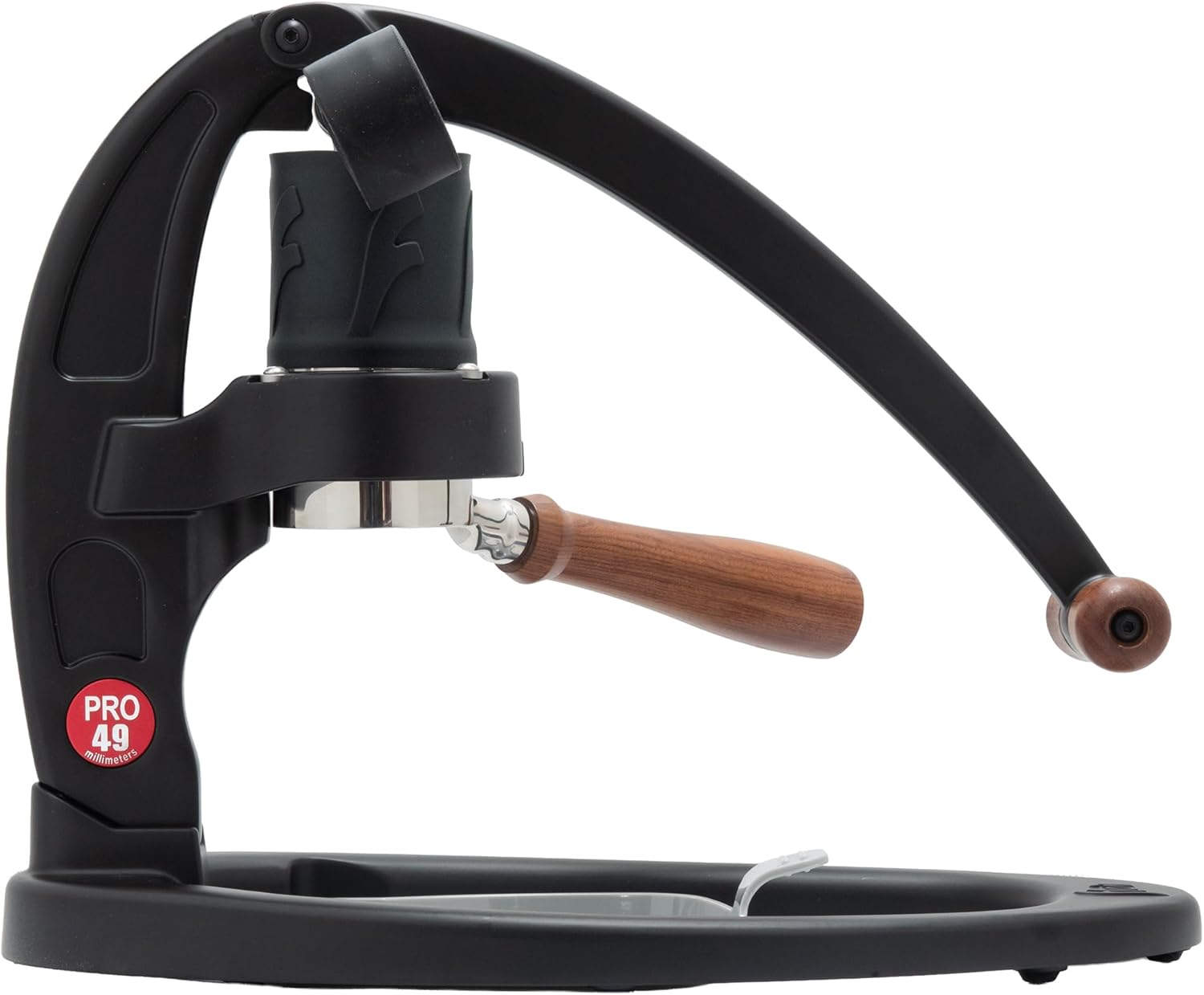
The Flair 49 PRO is another all-manual lever machine with a 49mm portafilter system, which the listing says can be more forgiving with grind size. It features an integrated pressure gauge with a marked “Espresso” zone for guidance.
A key feature is the lack of plastics in the brew path, using a stainless steel cylinder, valve plunger, and stem instead. It has a compact footprint and comes with both pressurized and bottomless filter baskets to suit beginners and experts.
Best for: Those who prioritize an all-stainless-steel brew path and want a forgiving, narrow portafilter system.
Pros
- No plastics in the brew path; uses stainless steel components
- Integrated pressure gauge with a marked espresso zone
- Includes both pressurized and bottomless filter baskets
- Compact footprint for a lever machine
Cons
- 49mm portafilter uses a non-standard size
- Manual operation only
- The listed 800-watt wattage is implausible for a manual machine and is not a relevant spec
3. Best for high-pressure portable extraction: STARESSO PLUS SP300
The STARESSO PLUS SP300 is a portable, manually operated espresso machine. The listing claims it uses segmented hydraulic extraction to generate pressure and can hold up to 24 grams of coffee powder.
It is constructed with food-grade 304 stainless steel metal parts and silicone. The design allows the main body to separate from the stand and components can be taken apart for cleaning. Its compact, folding design is intended for travel.
Best for: Travelers or those needing a very compact, high-pressure manual maker that’s easy to clean.
Pros
- Very compact and portable with a folding design
- All components separate for deep cleaning
- Made with food-grade stainless steel and silicone
- Holds up to 24 grams of coffee
Cons
- Very small capacity (24 ml per listing)
- The listing does not mention a pressure gauge
- Manual pumping requires physical effort
4. Best for ultra-compact travel: Wacaco Minipresso GR
The Wacaco Minipresso GR is a handheld, manually operated espresso maker that needs no electricity or batteries. It is designed for portability, with very small dimensions and a light weight.
Operation involves adding ground coffee and hot water, then pumping a piston to pressurize and extract the espresso. The main body material is listed as plastic. Accessories for longer shots and protection are sold separately.
Best for: Camping, hiking, or situations where the smallest possible size and weight are the top priorities.
Pros
- Extremely compact and lightweight
- No electricity or batteries needed
- Simple, pump-style operation
- Compatible with ground coffee
Cons
- Main body is made of plastic
- Very small capacity
- Accessories for longer shots are sold separately
- The listing does not mention a pressure gauge
Manual espresso makers at a glance
| Model | Key Feature | Brew Path Materials | Capacity | Footprint |
|---|---|---|---|---|
| Flair Classic | Lever with pressure gauge, 2 portafilters | Stainless steel, aluminum | 40 ml shot | 6″D x 12″W x 10″H |
| Flair 49 PRO | 49mm portafilter, no plastic in brew path | Stainless steel | 70 ml | 13.5″D x 7.5″W x 11″H |
| STARESSO PLUS | Portable, hydraulic pump | Stainless steel, silicone | 24 ml | 3.2″D x 4.3″W x 7.4″H |
| Wacaco Minipresso GR | Ultra-compact, piston pump | Plastic, stainless steel filter | 70 ml | 2.76″D x 2.36″W x 6.89″H |
How to choose a manual espresso maker
Choosing the best manual espresso maker depends on where you’ll use it and how much control you want. For a dedicated home setup, a lever machine like the Flair models offers the most hands-on experience, mimicking the control of a commercial machine. The included pressure gauge is a valuable tool for learning to apply the correct pressure during extraction. You can learn more about the different categories in our overview of Espresso Machine Types.
If portability is your main goal, pump-style makers like the STARESSO or Wacaco are designed to be packed away. They trade some control and larger capacity for a tiny footprint. Check the materials: travel models often use plastic for the body to save weight, but the brew chamber and filter should be stainless steel.
Finally, consider cleanup. Machines with detachable brewing heads or that fully disassemble are much easier to rinse thoroughly after use. Always follow the manufacturer’s manual for cleaning, maintenance, and safe operation, especially regarding the use of hot water and pressure.
FAQ
What’s the difference between a manual and a semi-automatic espresso machine?
A manual espresso machine, like the ones in this guide, requires you to provide all the force for the water pressure, typically via a lever or pump. A semi-automatic machine uses an electric pump to provide pressure at the push of a button, but you still control the grind, dose, and tamp. For a detailed comparison, see our article on Manual vs Semi-Automatic vs Automatic vs Super-Automatic Espresso Machines.
Do I need a special grinder for a manual espresso maker?
Yes, espresso requires a fine, consistent grind. For best results with non-pressurized filter baskets, you will need a high-quality burr grinder capable of an espresso grind. Some manual makers include a pressurized basket which is more forgiving of pre-ground coffee or less precise grinders.
Are manual espresso makers difficult to use?
They have a learning curve. You are responsible for preheating, dosing, tamping, and applying steady pressure. This can be rewarding but requires practice. Models with pressure gauges provide helpful feedback. Beginners might start with a model that includes a pressurized filter basket.
Can I make milk-based drinks with a manual espresso maker?
These machines only make espresso. To make drinks like lattes or cappuccinos, you will need a separate device to steam or froth milk, such as a standalone milk frother or a stovetop steamer.
References
- Amazon product listings and manufacturer specifications (accessed October 2026)
- Specialty Coffee Association
About Owen Palmer
Owen Palmer is part of our editorial team and reviews and edits our coffee machines guides, checking product details against manufacturer specifications and owner feedback.