 By Owen Palmer
Updated November 2026
The cuisinart vs breville grind and brew coffee maker decision mostly comes down to how you drink coffee. Cuisinart’s grind-and-brew models tend to suit households that want a straightforward, large-batch machine with fewer settings to learn. Breville’s offerings usually appeal to people who care more about grind control, brew temperature and dialing in a cup that tastes like it came from a good café. If you brew for a crowd and want simplicity, Cuisinart is often the easier choice. If you’re particular about flavor and willing to spend a few extra minutes on setup, Breville is typically the better fit.
Before comparing the two, it helps to understand what a grind-and-brew machine does. It has a built-in burr or blade grinder that grinds whole beans right before brewing, then passes the grounds into a filter basket and drips hot water over them. Freshly ground beans release more aroma and oils than pre-ground coffee, so the extra step is the main reason people buy these machines. For a broader look at the category, see Grind and Brew Coffee Maker: How It Works and How to Choose One.
Comparison at a Glance
| Criteria | Cuisinart Grind and Brew | Breville Grind and Brew |
|---|---|---|
| Grinder type | Built-in burr grinder, typically with a few grind settings | Built-in burr grinder, often with finer adjustment |
| Grind settings | Coarse to fine, simple selection | More granular control, sometimes numbered steps |
| Brew capacity | Commonly 10 to 12 cups on larger models | Commonly 8 to 12 cups, depending on the model |
| Brew temperature control | Generally fixed, within the standard drip range | Often engineered for consistent water temperature |
| Strength or brew-size options | Strength selector on many models | Brew-size and strength options on many models |
| Programmability | Programmable start times on most models | Programmable start times on most models |
| Cleaning and maintenance | Removable basket and carafe, with a regular descale schedule | Removable parts, plus a descale cycle |
| Best for | Families and households brewing large batches | Flavor-focused drinkers who want more control |
Specs vary by model and year, so confirm details on the product page before buying.
Grinder Quality and Grind Control: Breville Wins
The grinder is the part that most separates these machines. Cuisinart grind-and-brew models use a built-in burr grinder with a small set of settings, usually running from coarse to fine. For drip coffee, that is usually enough. A medium setting produces a consistent grind for an automatic brewer, and most owners will leave it there.
Breville’s grind-and-brew machines generally offer finer adjustment, which matters if you want to tune extraction. Grind size affects how quickly water passes through the coffee. A grind that is too fine can make coffee bitter, while one that is too coarse can taste thin and sour. Owners who enjoy experimenting often report that a finer dial lets them correct these issues without changing beans.
Winner: Breville, for anyone who wants precise control over grind size. Cuisinart is perfectly adequate for everyday drip coffee if you don’t plan to adjust much.
Brew Quality and Temperature: Breville Wins for Flavor
Water temperature during brewing has a direct effect on flavor. Water that is too cool under-extracts the coffee, while water that runs too hot can scorch the grounds and add harshness. The Specialty Coffee Association generally cites a brewing range around 195 to 205 degrees Fahrenheit as the target for good extraction. Breville machines are typically engineered to hold water closer to that range and to heat the water evenly across the grounds, which many owners say produces a fuller, more balanced cup.
Cuisinart drip machines brew well for their class, and many households are happy with the results. The difference tends to show most when you compare cups side by side, especially with lighter roasts that reward careful extraction.
Winner: Breville, mainly for consistent temperature and a more refined cup. For a strong, no-fuss cup of medium roast, Cuisinart is a reasonable choice.
Capacity and Batch Size: Cuisinart Wins for Groups
Capacity matters more than most buyers expect. Many Cuisinart grind-and-brew models are sized around 10 to 12 cups, which suits a family or a small office. Breville also offers machines in a similar range, but its lineup is often more focused on smaller, carefully brewed batches. If you regularly brew for four or more people, the larger Cuisinart models usually make more practical sense.
Keep in mind that brewing a full pot does not always produce the best cup. Owners who make a half-pot often report better flavor from a machine whose brew cycle is tuned for smaller volumes, so check whether a model offers a strength or size setting before you commit.
Winner: Cuisinart, for households that brew large, frequent batches.
Ease of Use and Programming: Cuisinart Wins
Both brands offer programmable start times, so you can set the machine the night before and wake up to fresh coffee. The main difference is the number of steps. Cuisinart’s controls are generally simpler: a grind selector, a strength option, a brew button and a timer. A new user can usually learn the machine in one or two sessions.
Breville’s panels tend to include more options, which is useful for experienced users and can feel busy for beginners. Owners who like tinkering often appreciate the extra settings. Owners who want to press one button and walk away often prefer Cuisinart’s approach.
For step-by-step instructions on the Cuisinart machine, see Cuisinart Grind and Brew Coffee Maker: Setup and Brewing Guide (2026).
Winner: Cuisinart, for simplicity. Breville is better for users who want the extra control.
Cleaning, Descaling and Long-Term Upkeep: Tie, With Notes
Both machines need regular cleaning and descaling. Mineral buildup from hard water can slow brewing, affect taste and eventually damage the heating element. Manufacturers generally recommend descaling every one to three months, depending on water hardness and how often you brew. Use a descaling solution made for coffee makers, or a diluted white vinegar solution if the manual allows it, and run plain water through the machine afterward until the smell is gone.
Breville machines often include a dedicated descale cycle or prompt, which can make the process more straightforward. For a detailed walkthrough, see How to Descale Breville Grind and Brew Coffee Maker: Step-by-Step (2026). Cuisinart models usually rely on a manual descale process described in the owner’s guide. Either way, a few minutes of maintenance each month will keep both machines performing well.
Grinders also need attention. Burrs can collect oil and fine particles over time, so most owners brush out the grinder area regularly and avoid putting beans with heavy oils or added sugars through the mill.
Winner: Tie. Both require regular descaling and grinder cleaning. Breville’s built-in descale prompt is a small convenience.
Build Quality and Reliability: Depends on the Model
Reliability varies by specific model, age and how well the machine is maintained. Common complaints across grind-and-brew machines include grinder jams from oily or stale beans, leaks from clogged brew paths, and weak output after neglected descaling. Many of these problems are preventable with regular cleaning and by using fresh, dry beans. If you run into trouble, Cuisinart Grind and Brew Coffee Maker Problems: Causes and Fixes covers the most frequent issues and how to solve them.
Replacement parts are another consideration. Cuisinart parts are widely listed through its customer support and third-party sellers, and Cuisinart Coffee Maker Grind and Brew Parts: A Practical Guide (2026) explains which components are commonly replaced. Check the availability of parts for any specific Breville model before buying, since product lines change.
Winner: Undetermined in general. Compare the specific model’s warranty terms and parts availability before deciding.
Which Should You Choose?
- Choose Cuisinart if you brew for a family or office and want a large batch in one cycle.
- Choose Cuisinart if you prefer simple controls and want to set it and forget it.
- Choose Cuisinart if you mostly drink medium or dark roasts and don’t need fine grind control.
- Choose Breville if you care about flavor and want fine grind adjustment to dial in each bean.
- Choose Breville if you buy lighter roasts or specialty beans and want consistent water temperature.
- Choose Breville if you enjoy experimenting and don’t mind a more complex control panel.
Product Picks
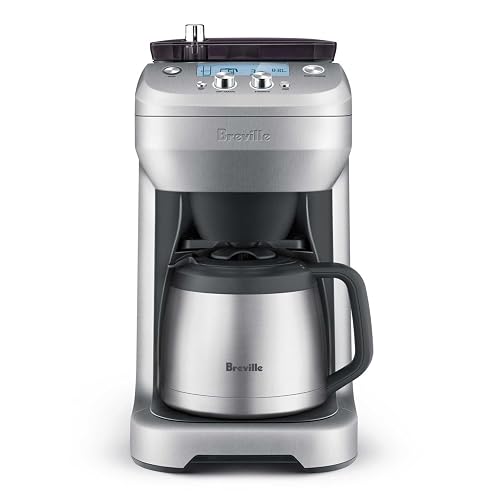
Here is the Cuisinart option to consider for a family-sized batch: View on Amazon. For a Breville option aimed at flavor-focused drinkers, see: View on Amazon.
If you’re still browsing, 7 Best Cuisinart Grind and Brew Coffee Reviews for Every Kitchen (2026) and 6 Best Breville Coffee Maker Grind and Brew Models Compared (2026) show a wider range of models so you can compare sizes and features.
FAQ
Is the Cuisinart or Breville grind and brew better for beginners?
Most beginners find Cuisinart easier to learn because its controls are simpler and there are fewer settings to adjust. Breville suits beginners who are willing to read the manual and experiment with grind size.
Does Breville make better coffee than Cuisinart?
Breville generally offers finer grind control and more consistent water temperature, which many owners say produces a more refined cup. Cuisinart brews well for everyday drip coffee, so the difference depends on how much you care about flavor details.
How often should I descale either machine?
Manufacturers commonly recommend descaling every one to three months. Hard water means more frequent descaling. Check your owner’s manual for the specific interval for your model.
Can I use pre-ground coffee in a grind-and-brew machine?
Most grind-and-brew machines can brew pre-ground coffee if you bypass the grinder, but the built-in grinder is designed for whole beans. Check the manual for instructions, since some models have a separate pre-ground option.
Which machine is better for a large family?
Cuisinart’s larger-capacity models are generally the more practical choice for a big household, since they brew a full batch in one cycle. Confirm the cup capacity on the specific model you’re considering.
Conclusion
The cuisinart vs breville grind and brew coffee maker choice is really a question of priorities. Cuisinart is the straightforward option for families and anyone who wants simple, large-batch brewing with minimal fuss. Breville is the better pick for people who want fine grind control, consistent brewing temperature and room to tune their coffee. Look at the specific model’s capacity, warranty and parts support before buying, and commit to a regular cleaning and descaling schedule whichever you choose. For a deeper look at how grinding affects your cup, check the guides linked throughout this article and compare the models that fit your kitchen.
Related reading
- Shop Deals on Cuisinart Grind and Brew Coffee Maker: 7 Best Models (2026)
- Cuisinart Custom Grind and Brew Single Cup Coffee Maker: 7 Best Picks (2026)
About Owen Palmer
Owen Palmer is part of our editorial team and reviews and edits our coffee machines guides, checking product details against manufacturer specifications and owner feedback.