 By Owen Palmer
Updated November 2026
A moka pot coffee maker is a stovetop brewer that forces hot water through ground coffee to produce a strong, concentrated cup often called stovetop espresso. This Primula Classic model suits people who want rich coffee without buying an electric machine, who already own a gas or induction range, and who don’t mind a few minutes of hands-on brewing. It is a weaker fit for anyone who wants true crema, a hands-off routine, or a dishwasher-safe pot, and buyers who need consistently high volume may prefer a larger or more robust stovetop model.

Primula Classic Stovetop Espresso and Coffee Maker, Moka Pot for Italian and Cuban Café Brewing, Greca Coffee Maker, Cafeteras, 6 Espresso Cups, Silver
Product Overview
The Primula Classic Stovetop Espresso and Coffee Maker is an aluminum-bodied moka pot sold under the Primula brand and marketed for Italian and Cuban-style café brewing. The listing identifies it as a six-espresso-cup model in a silver finish, and it uses the familiar three-part design: a lower boiler chamber, a perforated filter basket that holds the grounds, and an upper chamber where the finished coffee collects.
The basic brewing principle is simple. Water in the bottom chamber heats until it produces steam pressure, which pushes the water upward through the coffee grounds and into the top chamber. Because the process relies on pressure rather than gravity, it produces a denser, more intense drink than a standard drip machine. It is not true espresso, since most moka pots generate far less pressure than a dedicated espresso machine, but the result is closer to espresso than most automatic coffee makers can manage.
Moka pots of this general style are sold across a wide range of prices and sizes. The Primula Classic sits in the traditional, no-frills category: a basic pot with a simple handle, a safety valve, and a design that has been widely copied for decades. Owners who want a plain, functional stovetop brewer generally find this type of pot does the job.
Key Features & Specifications
| Feature | Details |
|---|---|
| Brand | Primula |
| Model name | Primula Classic Stovetop Espresso and Coffee Maker |
| Brewer type | Stovetop moka pot (three-chamber design) |
| Capacity | 6 espresso cups (listing figure; actual brewed volume is smaller per cup) |
| Color | Silver |
| Heat source | Stovetop (gas, electric, and induction compatibility depends on the base; confirm before buying) |
| Power | None (no electrical components) |
| Brewing style | Pressure-driven, concentrated coffee |
Manufacturers of stovetop pots typically specify that the safety valve should be checked before each use and that the pot should never be run dry. Confirm the induction compatibility of this specific unit with the seller or packaging before using it on an induction cooktop, since many aluminum moka pots are not induction-ready without an adapter.
Pros & Cons
Pros
- Produces a strong, concentrated coffee that many drinkers prefer to standard drip output.
- No electricity needed, so it works on a camping stove or any compatible burner.
- Simple, mechanical design with few parts that can fail.
- Small footprint and easy to store compared with most countertop machines.
- Low maintenance: rinse, dry, and occasionally descale.
Cons
- Requires active attention; you need to watch the pot to avoid over-extraction or burning.
- Aluminum construction is lightweight but may not suit everyone’s preference for stainless steel.
- Not dishwasher-friendly; hand washing is expected.
- Induction compatibility depends on the base, so buyers with induction cooktops should verify first.
- Does not produce the thick crema associated with machines that use high-pressure pumps.
Performance Analysis
Performance with any moka pot depends on three variables: grind size, heat level, and how you fill the basket. Most owners report that a fine-but-not-powder grind works best. If the grind is too fine, the coffee can clog the filter and cause pressure to build unevenly; if it is too coarse, the water passes through too quickly and the brew tastes thin. A good starting point is to fill the basket level without tamping, or with only a light press, so the grounds sit evenly under the filter.
Heat control matters just as much. Medium-low heat is the typical recommendation, because high heat can cause the coffee to bubble aggressively and taste bitter or burnt. The brewing sound is a useful cue: when you hear the gurgling change to a sputtering hiss, the upper chamber is nearly full, and it’s time to remove the pot from the heat. Leaving it on the burner too long is the most common reason people report a harsh, scorched flavor.
Owner feedback for stovetop pots as a category tends to focus on a few recurring themes. Many people praise the strength and body of the coffee and find it works well for milk drinks like lattes and cappuccinos when steamed milk is added separately. A recurring complaint is inconsistent results during the learning period, which usually resolves once a person settles on a grind and heat setting. Some owners also mention that aluminum pots can discolor over time, which is cosmetic rather than a performance issue, and that regular rinsing and occasional descaling keep the taste clean.
Because this is a research-based review, these observations reflect general patterns in moka pot usage and manufacturer guidance rather than a controlled test of this unit. Expect a realistic learning curve of several brews before you are consistently happy with the result.
Who Should Buy This Product?
This pot is a good match for someone who enjoys a hands-on ritual and wants strong coffee without electricity. It also suits people who already have a stove and want a second, compact way to make espresso-style coffee, such as for travel, a cabin, or a small kitchen with limited counter space. Households that brew one to three cups at a time tend to get the most from a six-cup stovetop pot, since the smaller brew sizes are easier to manage.
You should probably skip this product if you want push-button convenience, a dishwasher-safe setup, or a machine that handles milk frothing on its own. People who need to brew a large carafe for a crowd, or who struggle to stay at the stove for a few minutes, will likely be happier with an automatic drip or single-serve machine. Anyone with an induction cooktop should confirm base compatibility before purchasing.
Buying Guide
When shopping for a moka pot, start with the number of cups you actually brew. Stovetop cup ratings are measured in small espresso-sized servings, not standard mugs, so a six-cup pot may produce less coffee than you expect if you pour full mugs. Next, check the material. Aluminum pots heat quickly and are lightweight, while stainless steel versions are more durable, dishwasher-safe in some cases, and compatible with induction. Look at the handle and lid as well; a secure, heat-resistant handle makes handling much safer. For another angle, check out Stovetop Italian Coffee Maker Review: Is It Worth It?.
Confirm your cooktop type before buying. Gas and standard electric burners work with most moka pots, but induction requires a magnetic base. Finally, consider whether you want a traditional pot or a more modern design with a different filter or safety feature. Several well-known alternatives are worth comparing.
The Bialetti Moka Express is one of the most recognized names in the category and is often used as a reference point for stovetop brewing. It is widely available and easy to find replacement gaskets and filters for, which many owners appreciate. Pair this with a grinder setting guide before your first use.

Bialetti Moka Express Iconic Italian Stovetop Espresso Maker (Natural Silver, 6 Cups)
The Imusa USA aluminum stovetop espresso maker is another six-cup option with a similar three-chamber construction. It is a practical choice for buyers who want a basic, familiar design from a brand known for budget-friendly kitchen goods. As with any stovetop pot, expect to learn the right grind and heat level over a few brews.
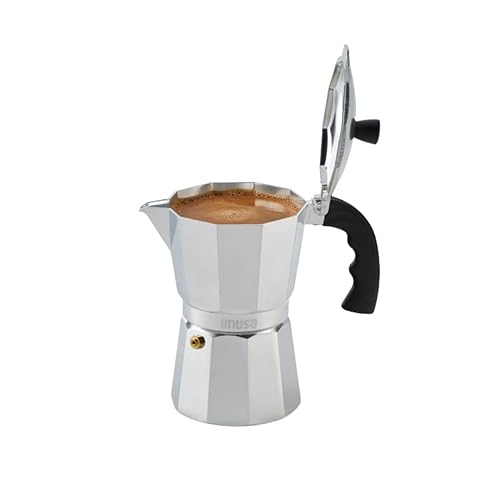
Ideal for Brewing Espresso Imusa USA Aluminum Stovetop 6-cup Espresso Maker (B120-43V), Silver
For a broader look at the category, see Moka Coffee Maker Bialetti: 5 Best Models for Stovetop Espresso (2026) and 7 Best Stainless Steel Moka Coffee Makers for Stovetop Espresso (2026). If you are weighing stovetop brewing against other styles, Types of Coffee Makers: How Each One Brews and Who It Suits explains the differences, and Single Serve Coffee Makers Explained: Pods, Reusable Filters and Pod-Free Options covers the pod-based alternative.
FAQ
Is a moka pot the same as an espresso machine?
No. A moka pot uses steam pressure from a stovetop, which is lower than the pressure produced by a dedicated espresso machine. The coffee is concentrated and strong, but it usually lacks the thick crema of true espresso. Many people still find it a satisfying alternative.
What grind size should I use in a moka pot?
Most manufacturers and experienced home users recommend a fine grind that is slightly coarser than espresso powder. Avoid very fine grounds, which can clog the filter, and very coarse grounds, which can produce weak coffee.
Should I use medium or high heat?
Medium-low heat is generally recommended. High heat can scorch the coffee and produce a bitter taste. Remove the pot from the burner as soon as you hear the sputtering sound that signals the upper chamber is filling.
Can I put a moka pot in the dishwasher?
Aluminum pots are typically hand-wash only, since dishwasher detergent can dull or discolor the metal. Check the manufacturer’s care instructions for your specific model before cleaning.
How often should I descale a moka pot?
Descaling frequency depends on your water hardness. In hard-water areas, a periodic descaling with a diluted vinegar solution helps keep the pot clean and the flavor fresh. Always rinse thoroughly afterward. For more detail, see Use White Vinegar to Clean Coffee Maker: 5 Best Descalers Compared (2026).
Can I use a moka pot on an induction cooktop?
Only if the pot has a magnetic base or you use an induction-compatible adapter. Check the product specifications and packaging before buying, since aluminum pots are often not induction-ready.
Why does my moka pot coffee taste bitter?
The most common causes are heat that is too high, leaving the pot on the burner too long, or a grind that is too fine. Adjust one variable at a time to find the balance that suits your taste.
Is a moka pot safe to use?
Moka pots are generally safe when used as directed. Check the safety valve before each use, never run the pot dry, and keep the handle cool by using a low to medium flame. If you have concerns about materials or pressure safety, consult the manufacturer or a qualified appliance professional.
Final Verdict
The Primula Classic moka pot is a straightforward, traditional stovetop brewer that delivers strong, concentrated coffee without electricity. It rewards patience and a bit of practice, and it is best suited to people who enjoy a hands-on routine and have a compatible stove. If you want effortless automation, look elsewhere. If you want a simple, durable pot for rich coffee at home or on the road, it is a sensible pick.
About Owen Palmer
Owen Palmer is part of our editorial team and reviews and edits our coffee machines guides, checking product details against manufacturer specifications and owner feedback.