 By Audrey Hayes
Descaling a Keurig with vinegar is one of the most common maintenance questions coffee drinkers ask, and for good reason: a jug of white distilled vinegar is inexpensive and easy to find. This review looks at the vinegar method as a product-style option, weighing its strengths and limits against dedicated descalers. It suits owners who want a low-cost, widely available way to clear mineral buildup and who are comfortable running several rinse cycles afterward. It is less suitable for people who want a no-odor process, owners whose manufacturer warranty forbids vinegar, or anyone with a hard-water setup who needs a fast, deep clean. If you prefer a manufacturer-approved product, you may want to skip this approach and read the alternatives below.
Product Overview
Keurig descaling with vinegar is a do-it-yourself method rather than a branded kit. The core ingredient is white distilled vinegar, typically sold as a standard grocery item, which is diluted with water and run through the brewer in place of coffee. The acetic acid in vinegar dissolves the calcium carbonate scale that builds up inside the water reservoir, heating element and internal tubing over time. Keurig itself has long recommended its own descaling solution, but many owners turn to vinegar as a substitute, and the method is widely documented across home-appliance guides.
The appeal is simplicity. You need a few common household items, a clean empty mug, and about half an hour of hands-on time spread across several brew cycles. The tradeoff is that vinegar leaves a noticeable smell and taste if rinsing is incomplete, and it is not the product the manufacturer designed for the job. Understanding those tradeoffs before you start will save you a lot of frustration.
Key Features & Specifications
The table below summarizes the main characteristics of the vinegar method. These are properties of the ingredients and the process, not claims about any single branded product.
| Attribute | Details |
|---|---|
| Primary ingredient | White distilled vinegar (typically about 5% acetic acid) |
| Typical dilution | Equal parts vinegar and water, or a 50/50 mix in the reservoir |
| Process length | Several brew cycles plus multiple clean-water rinses |
| Hands-on time | Roughly 30 to 45 minutes, including rinsing |
| Required supplies | Vinegar, fresh water, a large mug, and paper towels |
| Compatibility | Widely used on Keurig single-serve brewers; check your model’s manual |
| Warranty note | Some owners report warranty questions; Keurig recommends its own descaling solution |
Vinegar’s acidity is the key specification. Standard white distilled vinegar sits near the 5% acetic acid level, which is enough to dissolve common mineral scale but gentler on rubber seals than stronger industrial acids. Because the concentration is modest, it works through repeated cycles rather than in one pass.
Pros & Cons
Pros
- Uses an inexpensive, widely available household ingredient.
- Dissolves typical calcium carbonate scale from heating components.
- No special ordering or specialty product required.
- Easy to repeat on a regular schedule.
- Works on most single-serve brewers without disassembly.
Cons
- Leaves a vinegar smell and taste if rinsing is incomplete.
- Requires multiple cycles and thorough rinsing, adding time.
- Not the manufacturer’s recommended descaling solution.
- Can be less effective on heavy scale than purpose-made descalers.
- Owners sometimes raise warranty concerns, so checking your documentation matters.
Performance Analysis
Owner discussions about vinegar descaling tend to follow a few recurring patterns. Many people report that a single vinegar cycle followed by several plain-water rinses produces a machine that brews normally again, with the flow restored and the clunking or slow-drip symptoms reduced. Others say the first attempt left a sour note in the first few cups, which resolved after an additional rinse or two. Those reports suggest rinsing is the step most likely to make or break the experience.
The most common complaint is incomplete scale removal in machines that run hard water. Heavy mineral deposits can take more than one vinegar treatment, and some owners find that the cleaning cycle itself is slow compared with a commercial descaler formulated to dissolve scale faster. Overall, the pattern in research-based feedback is that vinegar performs adequately for routine maintenance and less impressively for neglected machines.
Taste is the other performance factor. Vinegar’s aroma is strong, and even trace residue can affect the first brews. Running at least two to three full water-only cycles, and ideally a larger volume of water than the reservoir capacity, is the step most often recommended to minimize this issue. Keep in mind that these observations come from published owner feedback and general appliance-care guidance, not from first-hand testing.
Who Should Buy This Product?
The vinegar method is a good fit for drinkers who want an affordable, low-effort routine and who already keep vinegar in the pantry. It makes sense for households with moderately hard water that descale every few months, and for people who are comfortable doing multiple rinse cycles. It is also a reasonable choice for anyone who wants to avoid buying a specialty descaler between scheduled cleanings.
You should probably skip this approach if you are sensitive to strong odors, if your machine is still under warranty and the manual specifies a particular descaler, or if your water is very hard and the machine already shows heavy buildup. In those cases, a manufacturer-approved solution or a dedicated descaler is usually the safer route. If you are unsure whether vinegar is allowed for your model, consult the owner’s manual or Keurig’s customer support before proceeding.
Buying Guide
Although vinegar is a household staple rather than a purchase, the buying decision really comes down to which descaling route you choose. When comparing options, look at how each handles scale, odor, rinse requirements and whether it is approved for your specific brewer. For a deeper look at the chemistry, see Descaling Solutions Compared: Vinegar vs. Citric Acid, which explains why each option behaves differently.
If you decide to use vinegar, buy plain white distilled vinegar rather than cider or flavored varieties, since colored or sugary vinegars can leave residue. Keep a few gallons of fresh water on hand for rinsing. For step-by-step instructions, How to Descale Keurig with Vinegar: A Step-by-Step Guide walks through the full process.
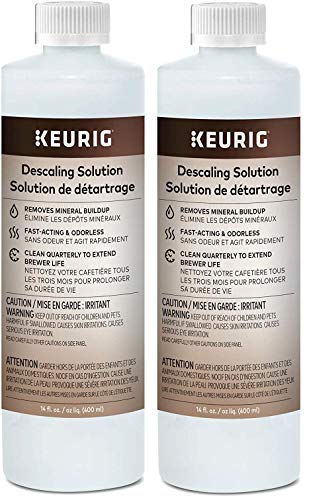
Many owners who want a no-vinegar route turn to Keurig’s own descaling solution, which the brand designs specifically for its brewers. A widely recognized alternative is a citric-acid-based descaler, which is often praised for a milder scent. Another well-known option is a general-purpose liquid descaler from a major household brand. Browse these options here: View on Amazon, View on Amazon, View on Amazon. Compare each against your machine’s manual before buying.
For a broader look at machines that handle descaling well, 6 Best Keurig Single Serve Coffee Makers (2026): Expert Picks covers models that are popular with owners who run regular maintenance.
FAQ
Is vinegar safe to use in a Keurig?
Many owners use diluted white distilled vinegar without reported problems, but Keurig recommends its own descaling solution. Read your manual and, if your machine is under warranty, contact support before using vinegar.
How much vinegar should I use?
A common approach is to fill the reservoir with a 50/50 mix of white distilled vinegar and water, then run brew cycles until the reservoir is empty, followed by several full water-only rinses.
How many rinse cycles are needed?
Owners commonly report running at least two to three full cycles of plain water, sometimes more, to eliminate any vinegar taste or smell.
How often should I descale with vinegar?
Frequency depends on water hardness and use. Many owners descale every three to six months, and more often in hard-water areas. Your machine’s indicator light can help you decide.
Why does my coffee still taste sour after descaling?
Residual vinegar is the usual cause. Run additional water-only cycles and make sure the reservoir is fully emptied and refilled between each rinse.
Can I use vinegar on the K-Cup holder or pod area?
Wipe these surfaces with a damp cloth rather than running vinegar through them. Keep liquid away from electrical parts and always unplug the machine before cleaning exterior components.
When should I see a professional?
If the machine still brews slowly, leaks, or shows error codes after thorough descaling, stop and consult Keurig support or a qualified appliance repair technician.
Final Verdict
Descaling a Keurig with vinegar is a practical, budget-friendly option for owners who want to keep their brewer running well between dedicated maintenance sessions. It is effective for routine scale, provided you commit to thorough rinsing and check your manual first. For owners who want the manufacturer’s approach or a faster result on heavy buildup, the dedicated Keurig descaling solution remains the most straightforward choice. If you want to compare brewers and maintenance-friendly models before deciding, start with View on Amazon and review its manual’s descaling instructions.
Related reading
About Audrey Hayes
Audrey Hayes is part of our editorial team and reviews and edits our coffee machines guides, checking product details against manufacturer specifications and owner feedback.