 By Owen Palmer
Updated November 2026
Shopping for a lever espresso coffee machine means choosing between a traditional piston-driven puller, a compact manual press, and a portable lever unit that packs into a bag. This list compares seven models in those categories. The selection criteria were build quality and materials, the way each design builds pressure, footprint and counter space, the learning curve for a beginner, maintenance and descaling needs, and the overall fit with how often and how much a home drinker will actually use it. The picks are based on manufacturer specifications, brand reputation and common owner feedback patterns, not on any testing we carried out ourselves.
Our top picks at a glance
- 1
 TOP CHOICEBest overallLa Pavoni PC-16 Professional Espresso MachineView on Amazon
- 2
 TOP CHOICEBest for small kitchensLa Pavoni EPC-8 Europiccola Lever Style Espresso MachineView on Amazon
- 3
 TOP CHOICEBest for pressure controlBincoo S3 Manual Espresso MakerView on Amazon
- 4
 Best for travelFlair 2GO Lever Espresso MachineView on Amazon
- 5
 Best for all-in-one convenienceBreville BES870XL Barista Express Espresso MachineView on Amazon
- 6
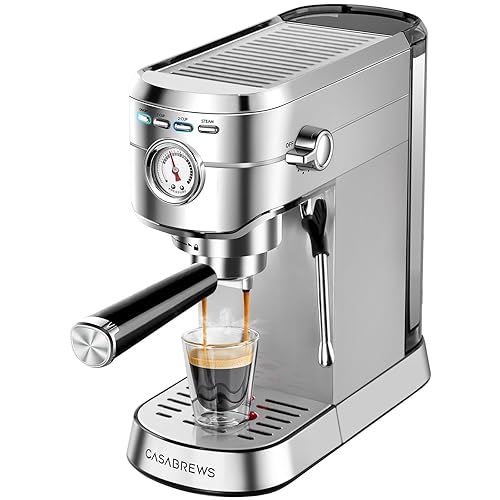 Best budget pickCASABREWS CM5418 Compact Espresso Machine with Milk Frothing Steam WandView on Amazon
- 7
 Best for steady daily useCASABREWS 3700 Essential Stainless Steel Espresso Machine with Steam WandView on Amazon
Our Top Picks
Quick Comparison
| Product | Best for | Key feature |
|---|---|---|
| La Pavoni PC-16 Professional | Serious home baristas with counter space | Solid brass boiler and dual frothing systems |
| La Pavoni EPC-8 Europiccola | Small kitchens and occasional use | Compact 0.8 L water capacity |
| Bincoo S3 Manual Espresso Maker | Users who want control over pressure curves | 12-bar pressure profiling with pre-infusion |
| Flair 2GO | Travel, camping and office use | Portable, collapsible design |
| Breville BES870XL Barista Express | Beginners who want a grinder built in | Integrated burr grinder |
| CASABREWS CM5418 Compact | Budget-minded buyers with limited space | 20-bar pump and steam wand |
| CASABREWS 3700 Essential | Everyday drinkers who want a simple workflow | 20-bar Italian pump and removable tank |
La Pavoni PC-16 Professional Espresso Machine
La Pavoni PC-16 Professional Espresso Machine – 16-Cup Capacity Lever Espresso Maker – Chrome Finish- Solid Brass 38oz Boiler – Dual Frothing Systems & Mounted Pressure Gauge – Made in Italy
Best for: Serious home baristas who want a traditional lever machine and have the counter space for it.
This is a large, heavy machine built for people who see espresso as a daily ritual. Owners who have the room and patience to learn lever technique often describe it as a long-term purchase rather than a gadget.
Key specs:
- 16-cup capacity
- Solid brass 38 oz boiler
- Chrome finish
- Dual frothing systems and mounted pressure gauge
- Made in Italy
Pros:
- Brass boiler suits sustained use
- Pressure gauge helps with shot consistency
- Traditional build that many owners find durable
Cons:
- Large footprint and significant weight
- Steeper learning curve than push-button machines
Bottom line: Best for dedicated home espresso drinkers with space and time to develop their technique.
La Pavoni EPC-8 Europiccola Lever Style Espresso Machine
La Pavoni EPC-8 Europiccola Lever Style Espresso Machine – Chrome & Silver – Manual Espresso Maker – 0.8 L Water Capacity, Authentic Italian Craftsmanship for Home Use
Best for: Small kitchens and people who want a lever machine without the bulk of a larger unit.
The Europiccola is a scaled-down version of the lever style, with a footprint that fits a crowded counter. It suits users who make a few shots a day rather than a steady stream.
Key specs:
- 0.8 L water capacity
- Chrome and silver finish
- Manual lever operation
Pros:
- Compact footprint for small kitchens
- Traditional Italian build
- Lower water volume means quicker refills for small batches
Cons:
- Small reservoir limits back-to-back drinks
- Requires hands-on technique to dial in shots
Bottom line: A good fit for solo drinkers or couples who want a lever machine on a small counter.
Bincoo S3 Manual Espresso Maker
Bincoo S3 Manual Espresso Maker – Hand Press Espresso Machine – 12Bar Pressure Profiling, Dual-Lever Manual Coffee Maker with Pre-Infusion, Portable for Custom Espresso Shots, Stainless Steel (Green)
Best for: Users who want fine control over pressure and pre-infusion in a hand-operated design.
This hand press model is aimed at people who enjoy adjusting variables such as dose, grind and pressure profile. Owners who like experimenting often value the pressure profiling feature most.
Key specs:
- 12-bar pressure profiling
- Dual-lever manual design
- Pre-infusion function
- Portable build
- Stainless steel finish (green colorway)
Pros:
- Pressure profiling offers flexibility in shot style
- Pre-infusion can help with even extraction
- Portable enough for occasional travel
Cons:
- Requires a separate grinder for fresh grounds
- Manual effort can be tiring over several shots
Bottom line: Suited to hobbyists who want to tune their espresso by hand and already own a good grinder.
Flair 2GO Lever Espresso Machine
Flair 2GO: Portable, Collapsible Lever Espresso Machine for 9BAR Espresso Anywhere (Grounds Model)
Best for: Travel, camping and office use where a full machine is impractical.
The 2GO is a portable, collapsible lever press designed to produce espresso without mains power. It works best for people who want good coffee away from the kitchen.
Key specs:
- Portable, collapsible construction
- Lever-driven 9-bar espresso extraction
- Grounds model
Pros:
- Packs down for transport
- No electricity needed
- Simple to clean compared with larger machines
Cons:
- Small yield suits one or two shots at a time
- Requires a grinder and a kettle for hot water
Bottom line: The right choice for people who want espresso on the go more than a permanent countertop machine.
Breville BES870XL Barista Express Espresso Machine
Craft café-quality espresso shots, lattes and cappuccinos at home with this manual coffee maker with built-in grinder Breville BES870XL Barista Express Espresso Machine, Brushed Stainless Steel
Best for: Beginners who want a grinder and steam wand in one machine, with a manual workflow.
Despite the “manual” label in its listing, this Breville is a semi-automatic machine with a built-in grinder and a dose-and-tamp workflow. It is a common starting point for people moving toward lever-style shots.
Key specs:
- Integrated burr grinder
- Brushed stainless steel
- Built-in steam wand for milk
Pros:
- Grinder built in saves counter space
- Steam wand supports lattes and cappuccinos
- Owners often find it forgiving for beginners
Cons:
- Not a true lever machine, so pressure is pump-driven
- Larger footprint than compact models
Bottom line: Ideal for buyers who want an all-in-one setup and are willing to trade pure lever feel for convenience.
CASABREWS CM5418 Compact Espresso Machine with Milk Frothing Steam Wand
Stainless Steel, 20-Bar Pump, Built-in Pressure Gauge, Powerful Steam Wand for Cappuccino Latte for Home, 34oz Water Tank CASABREWS CM5418 Compact Espresso Machine with Milk Frothing Steam Wand
Best for: Budget-minded buyers with limited space who still want milk drinks.
This compact unit uses a pump rather than a true lever, but it is a practical entry point for people comparing espresso setups on a tighter budget.
Key specs:
- 20-bar pump
- Built-in pressure gauge
- Powerful steam wand
- 34 oz removable water tank
- Stainless steel construction
Pros:
- Compact footprint
- Steam wand handles cappuccino and latte milk
- Pressure gauge aids dialing in
Cons:
- Pump design differs from a manual lever feel
- Smaller tank needs frequent refilling
Bottom line: A sensible pick for someone who wants espresso and milk drinks on a small counter without a lever-specific setup.
CASABREWS 3700 Essential Stainless Steel Espresso Machine with Steam Wand
20-Bar Italian Pump, Powerful Steam Wand, 43.9oz Removable Water Tank, Compact Espresso Maker for Home, Cappuccino & Latte CASABREWS 3700 Essential Stainless Steel Espresso Machine with Steam Wand
Best for: Everyday drinkers who want a straightforward daily workflow.
The 3700 Essential shares the pump-driven, compact approach of its sibling but adds a 43.9 oz removable tank, which many owners find more convenient for daily use.
Key specs:
- 20-bar Italian pump
- 43.9 oz removable water tank
- Powerful steam wand
- Stainless steel body
Pros:
- Larger tank reduces refill frequency
- Removable tank simplifies filling
- Steam wand supports milk drinks
Cons:
- Pump-driven, not a manual lever
- Requires regular descaling for longevity
Bottom line: Good for people who want a no-fuss daily machine and are less interested in manual technique.
Buying Guide
Lever Versus Pump Operation
A true lever machine uses your hand to generate the pressure that pushes water through the coffee. A pump machine uses an electric motor. Lever machines reward technique and give direct feedback, while pump machines are more consistent with less effort. Decide which experience you want before comparing specs.
Good picks for this: La Pavoni PC-16 Professional, Flair 2GO
Boiler Size and Heat Management
Boiler material and capacity affect how stable your temperature stays across several shots. Solid brass is often mentioned by owners for thermal stability, while smaller boilers recover faster between drinks. Consider how many drinks you will make in a row.
Good picks for this: La Pavoni PC-16 Professional, La Pavoni EPC-8 Europiccola
Footprint and Counter Space
Measure the space where the machine will live, including clearance for the cup and the lever stroke. Traditional lever machines can be tall and heavy, so a compact or portable model may suit a smaller kitchen better.
Good picks for this: La Pavoni EPC-8 Europiccola, CASABREWS CM5418 Compact Espresso Machine
Pressure Control and Pre-Infusion
Pressure profiling and pre-infusion let you shape extraction. Look for a visible pressure gauge if you want to learn by watching numbers, and check whether pre-infusion is adjustable or fixed. These features matter most to people who plan to experiment.
Good picks for this: Bincoo S3 Manual Espresso Maker, La Pavoni PC-16 Professional
Built-In Grinder Versus Separate Grinder
An integrated grinder saves space and simplifies your routine but limits upgrades. A separate grinder lets you choose burr quality and grind range independently. Many home users find that grind consistency affects shot quality more than any other single factor.
Good picks for this: Breville BES870XL Barista Express, Bincoo S3 Manual Espresso Maker
Milk Frothing Capability
If you drink lattes or cappuccinos, check for a steam wand. Some lever machines include a dual frothing system, while compact pump units often feature a dedicated wand. Consider whether you will froth milk daily or only occasionally.
Good picks for this: CASABREWS 3700 Essential, CASABREWS CM5418 Compact Espresso Machine
Maintenance and Descaling
Hard water builds up scale in boilers and group heads, which reduces performance over time. Check the manufacturer’s descaling instructions before buying and plan a regular schedule. For step-by-step guidance, see How to Descale a Coffee Maker and Espresso Machine Safely.
Good picks for this: La Pavoni PC-16 Professional, CASABREWS 3700 Essential
FAQ
Is a lever espresso machine harder to use than a pump machine?
Yes, for most people. A lever machine requires you to control pressure by hand, which takes practice to get consistent shots. Owners often recommend starting with a dose you can repeat and adjusting grind size first. For a beginner-oriented overview, see Espresso Machine with Lever: How to Choose and Use One (Beginner Guide).
Do I need a separate grinder for a lever machine?
In most cases, yes. Lever machines generally work best with freshly ground coffee of a consistent size, and many do not include a grinder. Some all-in-one models do, so check the listing before buying.
How often should I descale a lever espresso machine?
It depends on your water hardness and how often you brew. Manufacturers typically specify a schedule in the manual, and it is worth following it. Using filtered water can reduce scale buildup.
Can I take a lever espresso machine on a trip?
Portable models such as the Flair 2GO are designed for this. Larger lever machines are heavy and are better left at home.
What is the difference between a lever machine and a manual espresso maker?
The terms overlap. A traditional lever machine uses a spring or piston driven by hand. Hand press makers, such as the Bincoo S3, also use manual force but may offer pressure profiling features. Read the specifications to see exactly how pressure is generated.
Are lever machines worth it for milk drinks?
They can be, but many lever models focus on straight espresso. If you want lattes often, look for a machine with a steam wand or a dual frothing system, or plan to use a separate frother.
Conclusion
For most home users seeking a true lever experience, the La Pavoni PC-16 Professional suits those with the counter space and patience to develop technique, while the La Pavoni EPC-8 Europiccola fits smaller kitchens. The Bincoo S3 appeals to hobbyists who want to control pressure, and the Flair 2GO is the practical choice for travel. If you prefer convenience, the Breville BES870XL Barista Express and the CASABREWS models offer pump-driven workflows with milk frothing. Match the machine to your space, your appetite for hands-on technique and how many drinks you plan to make each day.
Sources
- Food safety guidance on water quality and cleaning practices for food-contact equipment (fda.gov)
- Information on energy use and efficiency for small kitchen appliances (energy.gov)
- Standards and certifications related to water filtration and drinking water equipment (nsf.org)
Related reading
- Mr Coffee Maker Espresso Machine: 5 Best Picks Compared (2026)
- Miele Coffee Espresso Machine Guide: Models, Features and Buying Tips
- Lever Manual Espresso Machine Buyer's Guide: 10 Best Picks for 2026
- Illy Espresso Coffee Machine: 7 Best Picks Compared (2026)
About Owen Palmer
Owen Palmer is part of our editorial team and reviews and edits our coffee machines guides, checking product details against manufacturer specifications and owner feedback.